
A lone, dust-coated four-wheel-drive vehicle parked on the edge of a remote, red-dirt track in Far North Queensland, its headlights off, bonnet still faintly warm in the dusk glow. The foreground shows deep tyre ruts cutting through ochre soil and scattered eucalyptus leaves, leading the eye toward a distant line of silhouetted sugarcane and dense tropical scrub. Above, bruised storm clouds gather, streaked with the last bands of golden hour light, casting long, cinematic shadows. A small, reflective object glints in the dirt beside the track, hinting at a crime scene without revealing details. Captured from a low, three-quarter angle with wide cinematic framing, the scene feels tense and anticipatory, embodying the atmosphere of Australian rural crime fiction.

Crime Novels

Explore every Peter Morris crime novel, from The Long Grass to new Far North Queensland mysteries.

About

Explore the Far North Cases

Browse Peter Morris’s crime novels in series order, compare editions and covers, and find the perfect entry point into his Far North Queensland mysteries, from standalone investigations to interconnected stories that share characters, locations and unresolved shadows.
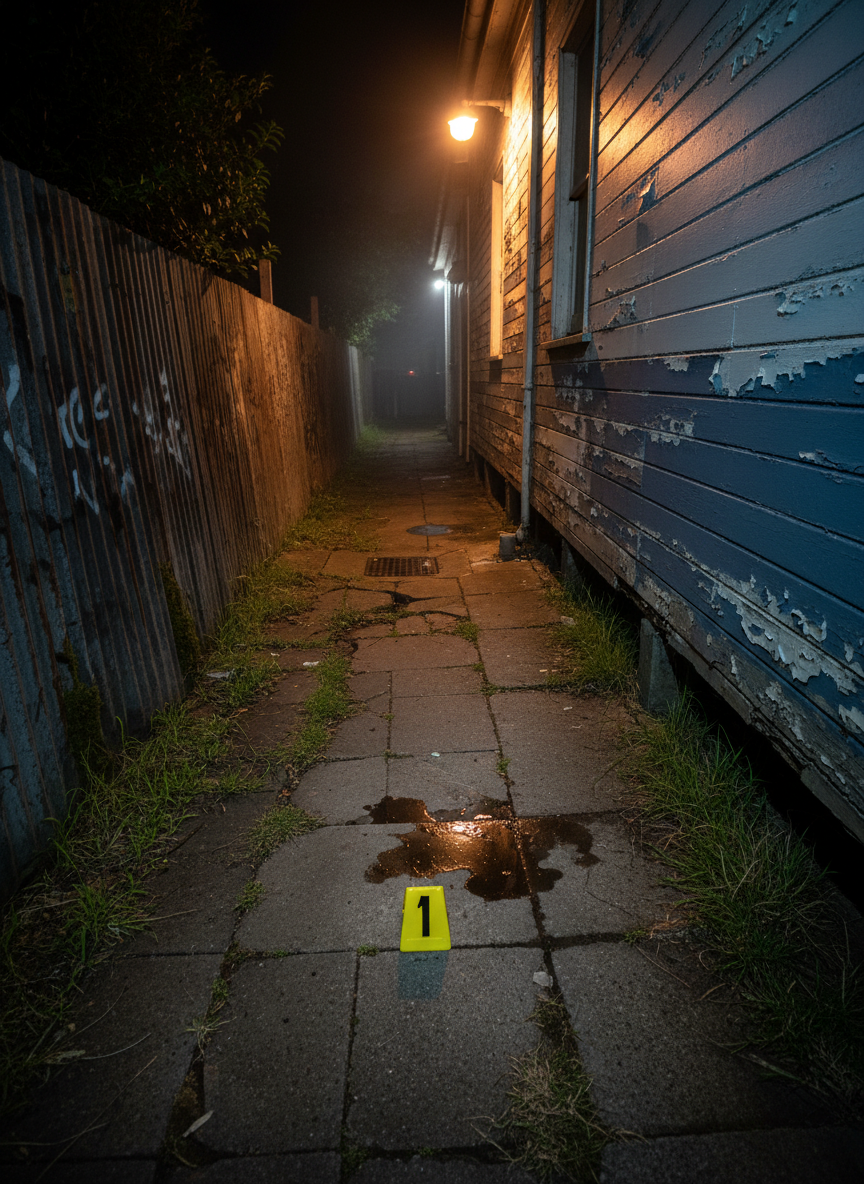
A narrow alleyway behind an old Queenslander pub, framed by rough corrugated-iron fences and peeling, sun-faded paint, the ground a patchwork of cracked concrete and damp, overgrown grass. In the centre lies a single, dropped evidence marker-style object in bright yellow plastic, but without any numbers or text, beside a dark stain that could be oil or something more sinister. A flickering, sodium-vapour security light casts harsh yellow illumination from the left, creating deep, inky shadows and a strongly directional, cinematic contrast. Humidity clings to the scene, with faint mist rising near a distant storm drain. Shot from a slightly elevated, oblique angle with strong leading lines and a deep depth of field, the composition suggests a pivotal moment in a crime investigation, set unmistakably in an Australian urban edge environment.

Praise

A weathered hardcover crime novel titled only by a faint embossed symbol on the spine, lying slightly askew on a dark, wooden writer’s desk. The cover shows a stylised map-like pattern evoking Far North Queensland’s coastline, with deep indigo and rust-red tones and subtle, scratched textures. Around it, blurred in the mid-ground, are scattered handwritten notes, an old brass fountain pen, and a closed laptop, all carefully turned so no text is legible. Late-afternoon light from an unseen window rakes across the surface, creating dramatic shadows and a cinematic, noir atmosphere. Shot at eye level with a shallow depth of field, the book’s edges are in razor-sharp focus while the background falls into soft, moody bokeh, suggesting the meticulous craft of an Australian crime author at work.

Hope D.

A haunting, beautifully written crime novel; the humidity, mangroves and shadows of Far North Queensland stayed with me after I closed the book.
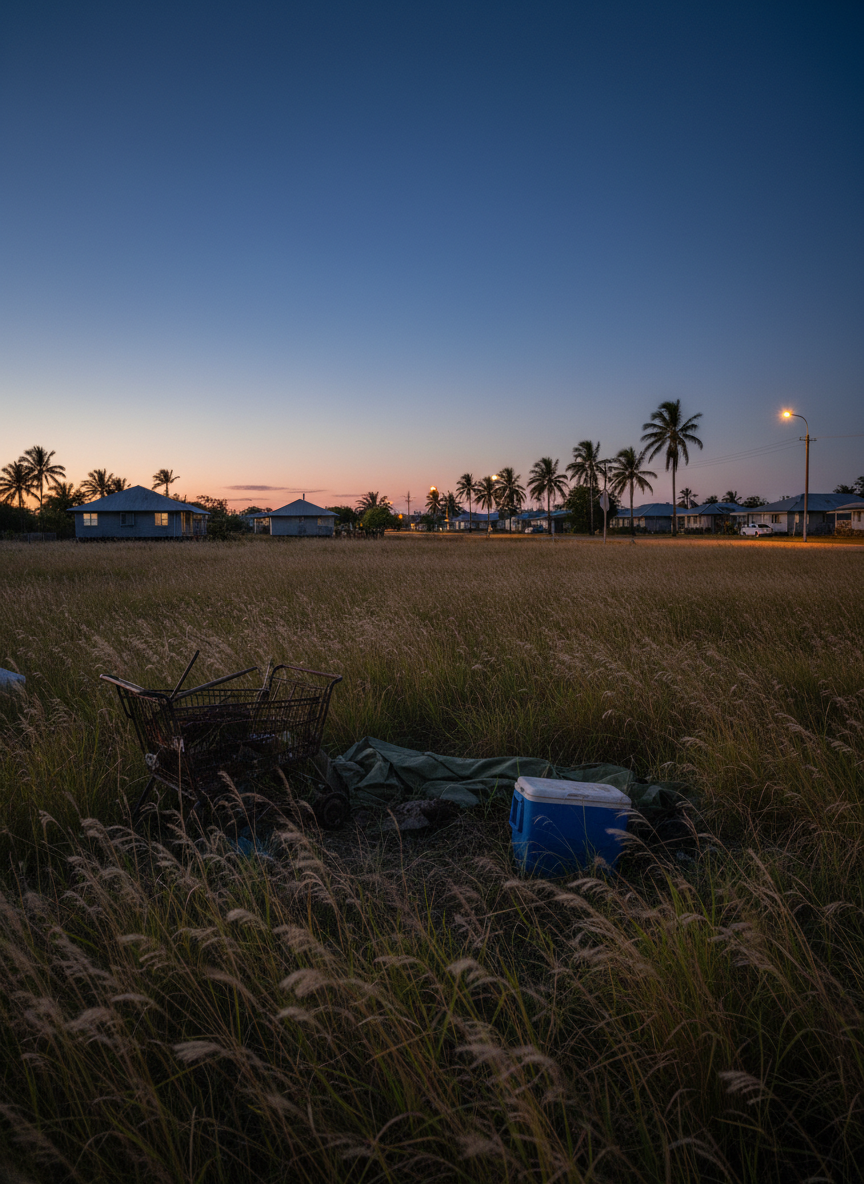
A panoramic, cinematic view of Far North Queensland’s ‘long grass’ on the outskirts of a tropical town at twilight, tall, unkempt blades of grass in the foreground bending slightly in a humid breeze. Discarded items—a rusted shopping trolley, a faded esky, a torn tarp—are half-hidden among the vegetation, hinting at lives lived out of sight without showing any people. In the mid-distance, the soft glow of streetlights silhouettes low, weatherboard houses and a line of swaying palms. The sky is a deepening cobalt, with lingering pink on the horizon after sunset, casting soft, diffused light and gentle, elongated shadows. Shot at eye level with a moderate depth of field, the overall mood is melancholic and contemplative, suggesting the human stories and potential crimes concealed within this Australian landscape.

Hope D.

The Long Grass is gripping and unhurried, blending police procedural detail with a sense of community, country and the quiet menace of isolation.
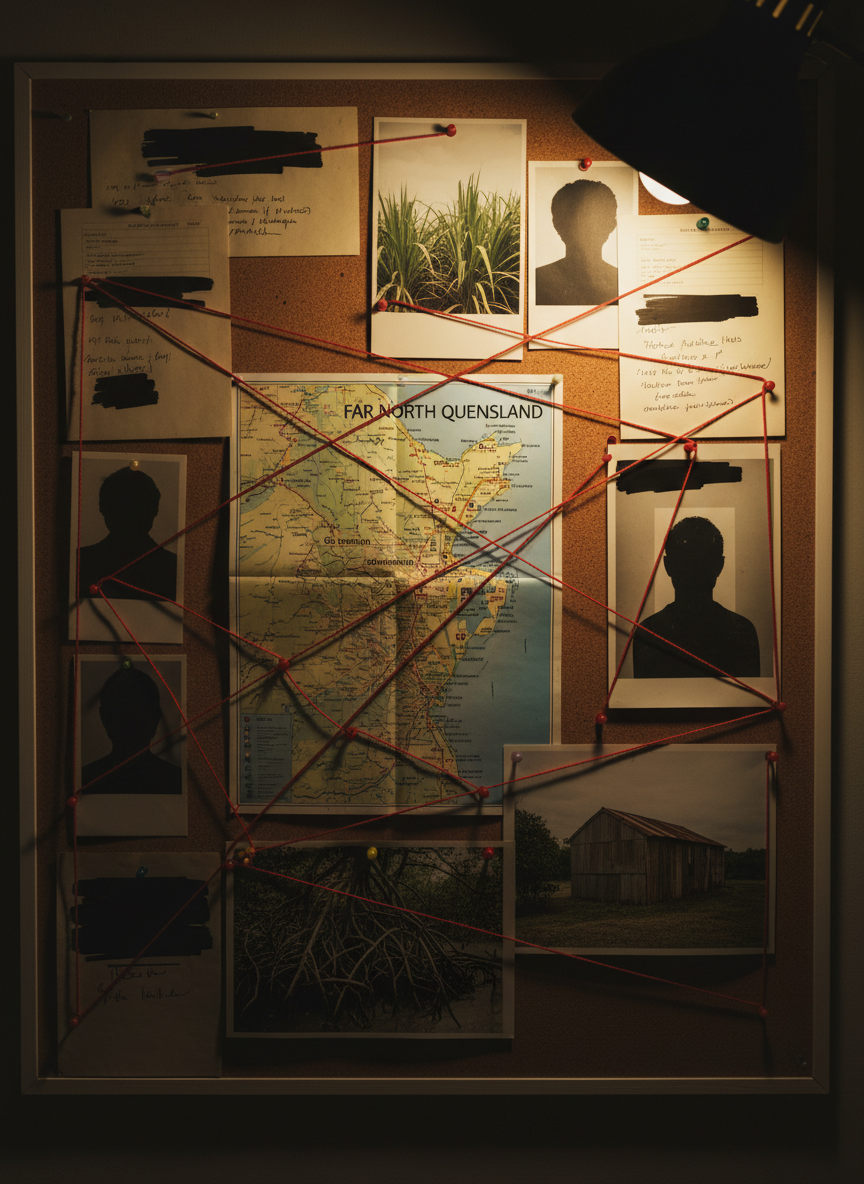
A close-up, cinematic overhead shot of a corkboard-style evidence wall in a dimly lit study, filled with anonymous crime fiction details but no legible text or faces. There are blurred photocopied documents with redacted blocks, abstracted mugshot silhouettes with facial features obscured, a folded tourist brochure map of Far North Queensland with tiny red string connecting coastal towns to inland communities, and pinned photos of landscapes—cane fields, mangroves, rusted tin sheds. A single desk lamp casts a warm, focused pool of light from the top right, leaving the corners in deep shadow. The composition uses strong diagonals of red string to guide the viewer’s eye, with a shallow depth of field isolating the central cluster of pins, evoking the intricate plotting of a professional Australian crime author.

Hope D.

Peter Morris captures the tension of small-town loyalties and secrets; every chapter feels like storm clouds building over the Far North Queensland coast.

A lone, dust-coated four-wheel-drive vehicle parked on the edge of a remote, red-dirt track in Far North Queensland, its headlights off, bonnet still faintly warm in the dusk glow. The foreground shows deep tyre ruts cutting through ochre soil and scattered eucalyptus leaves, leading the eye toward a distant line of silhouetted sugarcane and dense tropical scrub. Above, bruised storm clouds gather, streaked with the last bands of golden hour light, casting long, cinematic shadows. A small, reflective object glints in the dirt beside the track, hinting at a crime scene without revealing details. Captured from a low, three-quarter angle with wide cinematic framing, the scene feels tense and anticipatory, embodying the atmosphere of Australian rural crime fiction.

Hope D.

Atmospheric, character-driven crime that trusts the reader; the landscape is as alive and watchful as any detective on the page.

Book Enquiries

Request review copies, event appearances or library information about Peter Morris’s crime novels set in Far North Queensland.

← Back

Thank you for your response. ✨