Field Notes
Welcome, and thanks for visiting.
If you’ve found your way here, chances are you enjoy crime fiction as much as I do, so thank you for stopping by.
The Long Grass began with a simple question: what if the victims weren’t innocent?
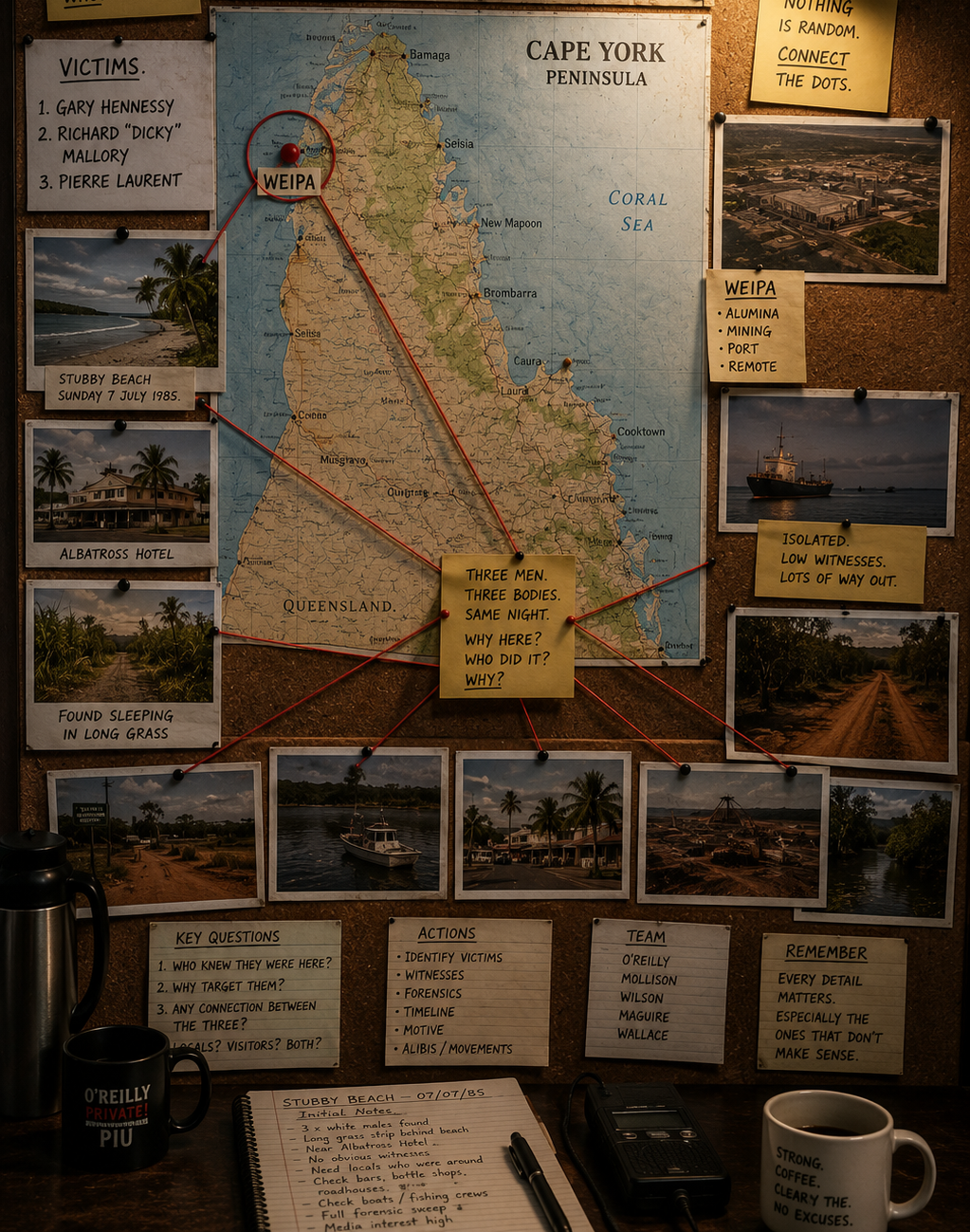
That question eventually grew into a novel set in Weipa, Far North Queensland, during 1985. It starts with the brutal murder of three men sleeping rough in the long grass. At first, it appears to be a straightforward murder investigation, but as the detectives uncover the victims’ pasts, the story becomes less about who committed the crimes and more about why.
I wanted to write a crime novel that explored more than simply catching a killer. The Long Grass looks at justice, revenge, trauma and the long shadows cast by violence. It’s also very much a story about Queensland in the mid-1980s—a time and place that fascinated me and demanded a great deal of historical research.
Over the coming months, I’ll be using this blog to share some of that research, the real places that inspired the novel, interesting discoveries about 1980s policing and a few behind-the-scenes stories about how the book came together.
If you’ve read The Long Grass, I’d genuinely love to hear what you thought. If you’re still deciding whether it’s for you, I hope these posts give you a feel for the world and the characters before you turn the first page.
Thanks again for visiting, and happy reading.
Peter Morris
 Peter Morris | Australian Crime Author